March 2026 letter - breathing
Breathing
This month I wanted to talk about the benefits of breathing, not only as a way to reduce stress, but also other benefits of breathing.
Controlling your breathing, the right way, is important for your health; it enhances the benefits of diet and exercise. Breathing exercises can influence many bodily functions, such as heart rate, immune system, and body temperature. Conscious breathing therefore provides control over many autonomic bodily functions.
The autonomic nervous system, which consists of the sympathetic and parasympathetic nervous systems, independently regulates many functions, such as heart rate. Breathing affects these systems: inhaling activates the sympathetic system and provides energy to the body, while exhaling stimulates the parasympathetic system and promotes relaxation. Continuous inhalation and exhalation keep these two systems in balance. The faster you breathe, the faster you get oxygen and the faster you get carbon dioxide, which stimulates the sympathetic nervous system and invigorates the body. Then again, slow, deep breathing and prolonged exhalation increase the amount of carbon dioxide and reduce the amount of oxygen, which in turn lowers blood pressure and increases blood circulation. Therefore, the breathing rate controls these body processes and the efficiency of energy use.
Important gases:
- Oxygen: Too much oxygen causes oxidative stress, so we need to breathe 'less' to extend our lifespan.
- Carbon dioxide: Important for oxygen transport and nervous system balance.
- Nitric oxide: Strengthens immunity, regulates blood pressure and reduces inflammation.
Understanding the balance of all these gases is important. They can be effectively influenced, for example, by breathing exercises.
Unhealthy Breathing:
When we are stressed and busy, our breathing is often very shallow and unhealthy. We breathe mainly through our mouth and upper chest. This leads to excessive carbon dioxide release, which in turn leads to low oxygenation of the body's tissues and increased oxidative stress. This type of breathing is most pronounced during periods of intense stress, panic attacks and extreme anxiety.
Chronic mild hyperventilation, which is often unnoticed, is a significant cause of stress and low oxygenation of the body's tissues. Stressful breathing, especially when anxious or overwhelmed, leads to a reduced ability to take in oxygen. Such deep, heavy breathing therefore does not increase oxygenation, but rather reduces it.
This type of breathing overactivates the sympathetic nervous system and can cause inefficiency in the body's functions. Breathing in too much oxygen at one time can cause oxidative stress in the body.
Healthy Breathing:
Healthy breathing is slow, subtle breathing through the nose, which in turn promotes efficient oxygenation of the body's tissues. We breathe through the diaphragm, not the upper chest. Breathing through the nose prevents hyperventilation and enhances the production of nitric oxide.
Try this breathing for yourself like this:
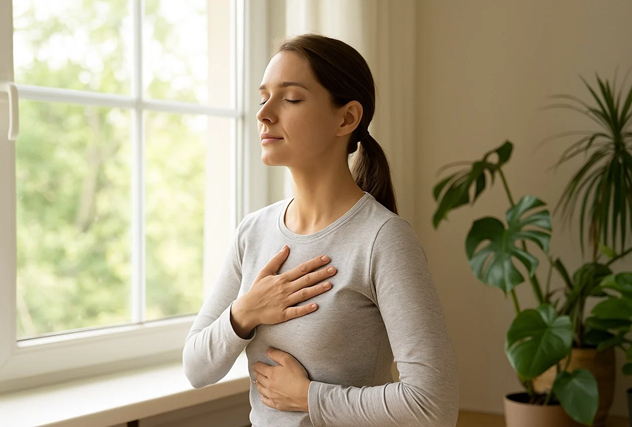
Place your left hand on your diaphragm and your right hand on your chest. Breathe in calmly through your nose, imagining the air coming into your lower back (your left hand rises). Exhale gently and take a natural pause of about 4 seconds before taking the next breath. This exercise is calming and relaxing. Diaphragmatic breathing helps maintain balanced oxygen and carbon dioxide levels.
In summary, recognizing and adjusting our breathing pattern can have a very significant impact on our overall well-being, it relaxes us and reduces stress.
This month:
Learn to keep an eye on your breathing pattern throughout the day and correct it if necessary. Stress often leads to unconscious hyperventilation, but we can control this with conscious breathing.
Everyday examples of unconscious hyperventilation:
- Stress, anxiety or working under pressure.
- Eating quickly or overeating, which disrupts normal breathing rhythms.
- Sleeping in the wrong position, such as on your back, can lead to snoring and hyperventilation.
- Long periods of talking, intense exercise or overheating while sleeping.
Tips for healthy breathing:
- Chew food thoroughly to promote digestion and maintain stable breathing.
- Sleep on your side to promote relaxed breathing.
- Keep the room temperature cool to prevent overheating and hyperventilation while sleeping.
- Take breaks to breathe through your nose when talking for long periods or during intense exercise.
So learn to observe your breathing, it reflects your mind. When you are anxious and worried, your breathing loses its rhythm and may become irregular, and you may breathe through your mouth into your upper chest. But when you are calm and relaxed, your breathing becomes much more subtle, quiet and calm, as if you were not breathing at all.
Changing your breathing pattern can significantly improve your well-being and the way your body uses oxygen.